Toward a Trusted Information Society
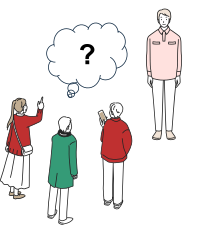
We intuitively judge whether
someone can be trusted,
drawing on a range of cues
and experience.We intuitively judge whether someone can be trusted, drawing on a range of cues and experience.
When we are still uneasy, we might ask someone, or look into it ourselves.
Or we may simply decide not to judge right away.
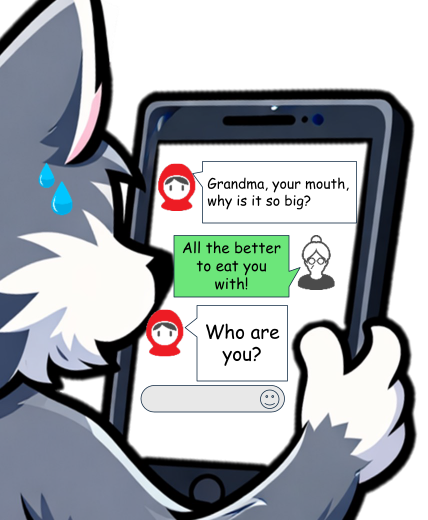
So then, what about the Internet?
OP identifies who is behind information
on the Internet and makes visible
the third-party assessments built up
from the past to the present.OP identifies who is behind information on the Internet and makes visible the third-party assessments built up from the past to the present.
In doing so, it backs up our intuition
and works toward a society in which trustworthy information circulates freely.
When we want to convey something to others,
we sometimes rely on
a third party’s assessment
to show we can be trusted.we sometimes rely on a third party’s assessment to show we can be trusted.
It is not enough for someone to simply insist
that they are trustworthy.
That is why
trust becomes possible when a person or organization
with a proven track record, one that many people already recognize,
vouches for you and confirms
that you are the real thing.vouches for you and confirms that you are the real thing.
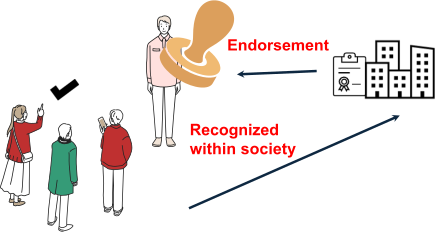
In the OP model, the role of this
third party recognized within society
is realized in the information space.In the OP model, the role of this third party recognized within society is realized in the information space.
What is more, OP provides several such third-party entities. In this way, it overlays real-world trust onto information on the web and, by conveying who was involved in publishing the information and whether they actually exist, shows how reliable that information is.
What OP Enables
In the real world,
we pay close attention to who is speaking
and how others regard them,
and we judge what they say accordingly.we pay close attention to who is speaking and how others regard them, and we judge what they say accordingly.
OP brings this same idea to the information space.
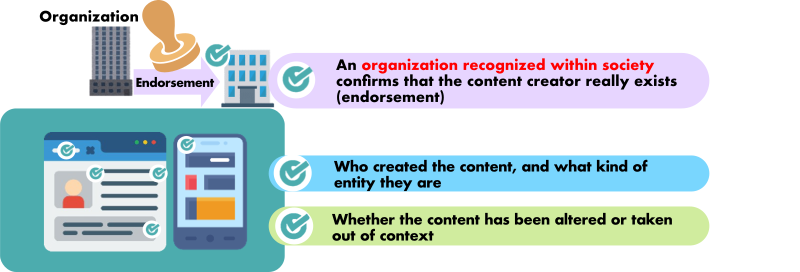
An industry association the content creator belongs to, or another organization recognized within society, confirms that the originator really exists, and anyone can check this. It also makes automated processing based on that information possible. As OP technology takes hold, it builds an information space where trust is made visible and given real value.
Endorsement Extends to Distribution Channels
The endorsement mechanism is
not limited to content creators. not limited to content creators.
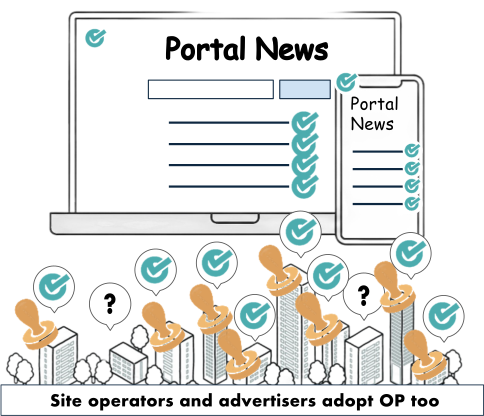
When the site operators that users actually see, such as portals and platforms, along with advertisers, also adopt OP,
the range over which trust can be made visible grows wider.
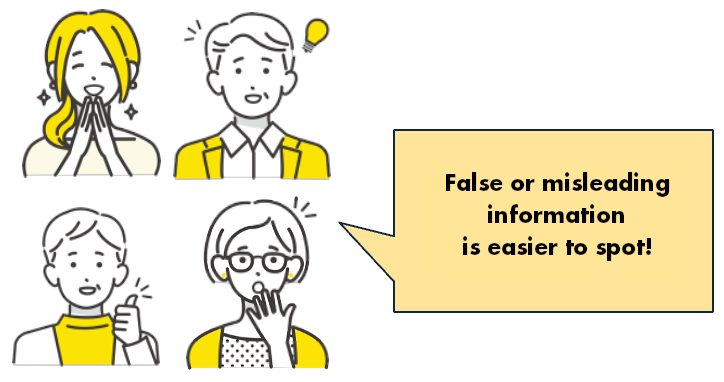
This creates an ecosystem that false or misleading information struggles to enter,
making users safer.
OP Ecosystem and Its Contribution to Society
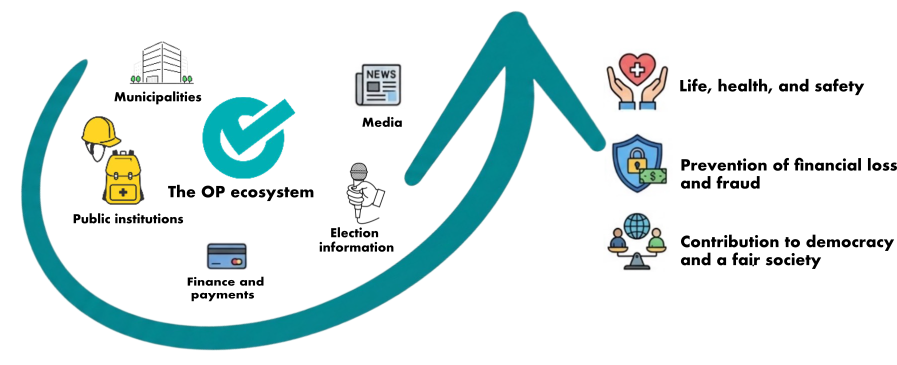
An OP ecosystem that can confirm and guarantee the authenticity of information originators and service providers
spreads across many industries, and as it does,
the reliability and safety of information
improve across society as a whole.spreads across many industries, and as it does, the reliability and safety of information improve across society as a whole.
For a healthier future
of the Internet.