Toward a Trusted Information Society
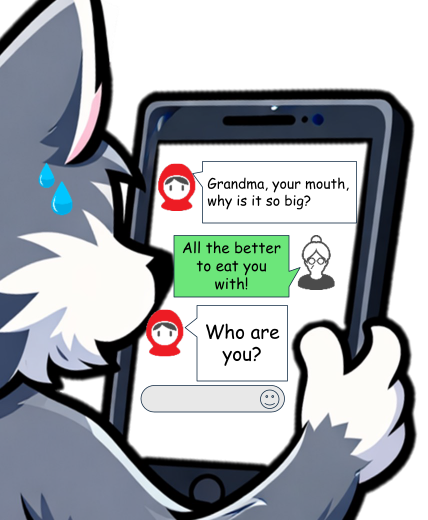
Facial expressions, tone of voice, clothing, demeanor… We intuitively judge whether someone can be trusted, drawing on a range of cues and experience.
When we are still uneasy, we might ask someone, or look into it ourselves.
Or we may simply decide not to judge right away.
So then, what about the Internet?
OP identifies who is behind information on the Internet and makes visible the third-party assessments built up from the past to the present. In doing so, it backs up our intuition and works toward a society in which trustworthy information circulates freely.
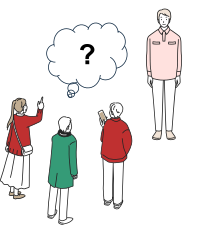
When we want to convey something to others, we sometimes rely on a third party’s assessment to show we can be trusted.
It is not enough for someone to simply insist that they are trustworthy.
That is why trust becomes possible when a person or organization with a proven track record, one that many people already recognize, vouches for you and confirms that you are the real thing.
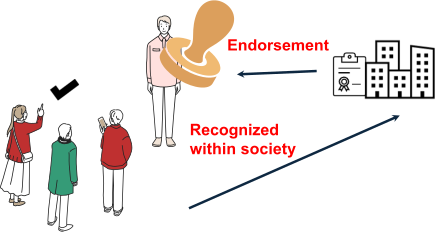
In the OP model, the role of this third party recognized within society is realized in the information space.
What is more, OP provides several such third-party entities.
In this way, it overlays real-world trust onto information on the web and, by conveying who was involved in publishing the information and whether they actually exist, shows how reliable that information is.